
This content is for general information and does not replace diagnosis or personal treatment advice. Medical decisions must be made by a licensed clinician.
Key takeaways
- FUE and DHI are not always two entirely separate operations; a plan may extract grafts with FUE and place them with an implanter.
- Graft count alone is not a quality measure. Safe donor management and a natural, age-appropriate hairline matter more.
- When comparing quotes, verify who plans and performs each stage, what follow-up includes, and how complications are handled.
What are FUE and DHI, and where does the difference begin?
FUE describes the individual extraction of follicular units, the naturally occurring groups that contain one or more hairs, from a donor area. A small punch is used for extraction. Grafts are then sorted, protected, and placed according to a plan for hairline, direction, and density. In other words, FUE primarily tells you how grafts are harvested.
DHI is often marketed as a separate operation, but the term commonly describes graft placement with an implanter pen. Those grafts may still have been extracted by FUE. Some teams create recipient sites first; others create an opening as the pen places the graft. More important than the label are graft handling, time outside the body, control of angle and direction, and the experience of the clinical team.
FUE or DHI: Which factors should you actually compare?
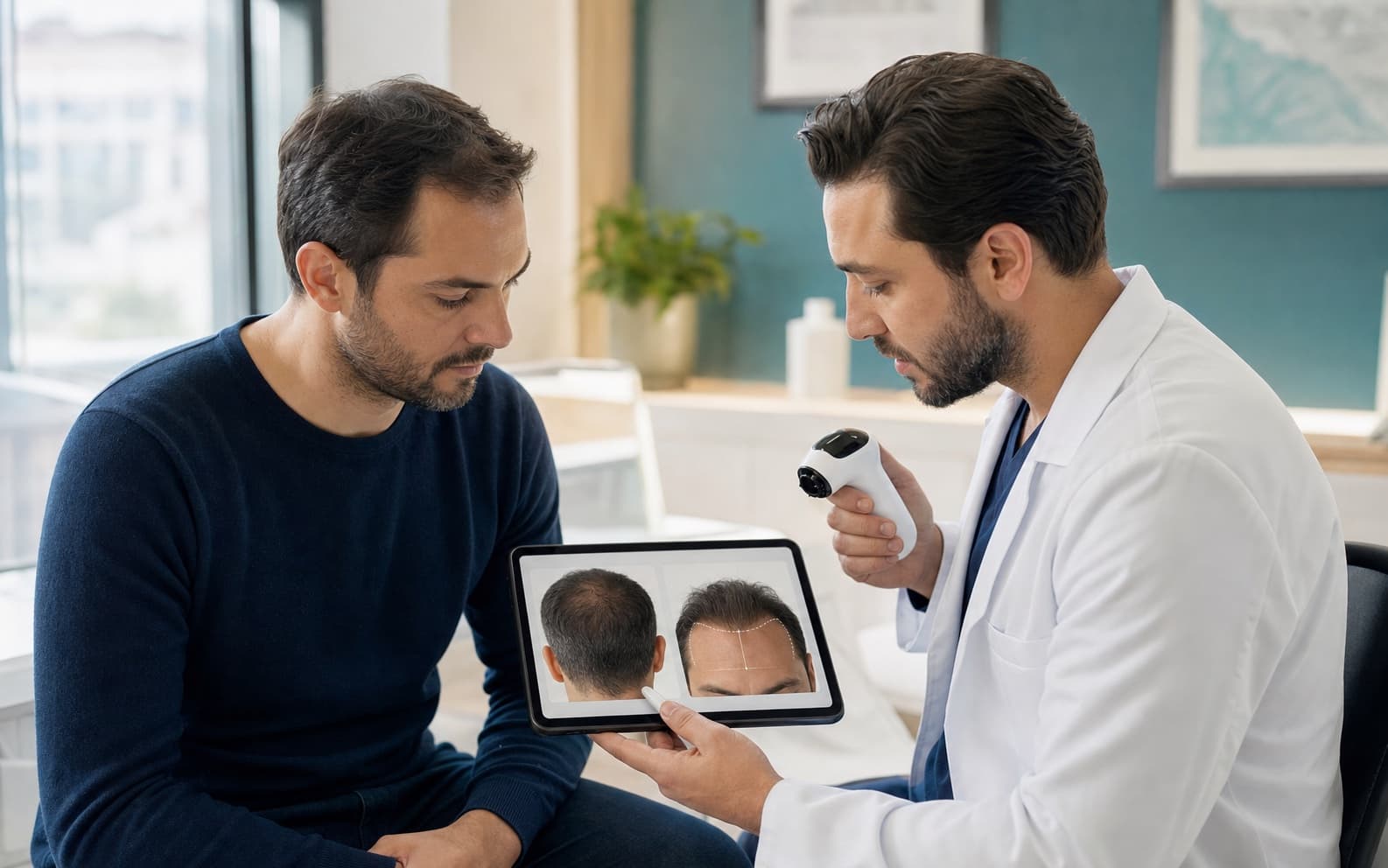
It is not accurate to claim that one technique always produces denser, more natural, or faster results. Working between existing hairs, covering a broad area, shaving preferences, graft characteristics, and procedure duration can all affect tool selection. A clinician should assess these variables alongside examination findings and standardized photographs.
An implanter may reduce direct handling during placement and can assist angle control in selected areas. For larger areas, workflow, staffing, and operating time may differ. A pre-made recipient-site approach can also control direction, angle, and distribution when carefully planned. A device name is therefore not a guarantee of outcome.
- Donor density and hair-shaft calibre
- Current loss and likely future progression
- A natural, age-appropriate hairline
- Graft protection during extraction and placement
- Clinical responsibility, sterile process, and follow-up
Why do candidacy and donor supply matter more than the method name?
A transplant does not create new hair; it redistributes a limited donor supply. Overharvesting can leave the back and sides looking thin or irregular. A responsible plan considers not only today's bald area but also age, family history, and likely future loss. A dermatology assessment may be appropriate when the cause or stability of hair loss is uncertain.
The diagnosis should be clear before surgery. Pattern hair loss, patchy alopecia, active scalp disease, and temporary shedding are not managed in the same way. The NHS likewise notes that transplantation is not suitable for every form of hair loss. Photographs can support an initial review, but candidacy requires clinical examination, medical history, and tests when indicated.
How should you set recovery and outcome expectations?
Tenderness, swelling, and crusting can occur in the early days. Follow the clinic's written instructions on washing, sleep, exercise, and products because newly placed grafts need protection. The NHS notes that grafts are vulnerable during the first two weeks and that some people may need one to two weeks away from work. Individual timing depends on healing and job demands.
Early shedding of transplanted shafts may be an expected part of the cycle; new growth begins later from surviving follicles. Do not judge the outcome too early. The NHS describes growth becoming visible over several months and the fuller result taking considerably longer. The clinic should provide a photo schedule and clear instructions for unexpected symptoms.
What should you check when comparing clinics and quotes?
The lowest price or highest graft promise is not enough for a safe choice. A quote should state the examination, tests, medication, which stages the clinician performs, technique, possible extras, and follow-up dates. Review before-and-after photographs from comparable patterns and hair types, with consistent lighting and angles.
Turkavia is a health-service coordinator; it does not diagnose or select a surgical method. We help route your information for clinical assessment, make scopes easier to compare, and coordinate travel, accommodation, and follow-up communication. A licensed clinician must decide candidacy, graft count, and technique.
- Clinician's name, specialty, and verifiable registration
- Division of responsibility between clinician and technicians
- Evidence behind the proposed graft range
- Complication and revision communication process
- Photo and follow-up schedule after returning home
Eight clear questions to ask at consultation
A useful consultation does more than produce a quote. It explains why you are a candidate, the limits of the plan, and reasonable alternatives. Written answers reduce misunderstanding in cross-border care.
- What is the diagnosis and likely progression of my hair loss?
- How was my donor capacity measured?
- Why is this technique or combination recommended?
- Will the hairline remain natural as I age?
- Which stages will the clinician perform?
- What are the risks and realistic density limits?
- What is my care plan for the first two weeks?
- Who do I contact about an unexpected symptom or concern?
Frequently asked questions
Is DHI definitely better than FUE?
No. The terms can describe different parts of the same procedure, and the appropriate tools depend on the individual plan. Candidacy, donor management, hairline design, graft handling, and clinical execution work together.
Is unshaven DHI suitable for everyone?
No. Shaving depends on recipient area, graft range, existing hair, operating time, and workflow. The advantages and limits of partial or full shaving should be discussed during assessment.
Can an exact graft count be confirmed from photos?
Photographs provide an initial estimate only. The final plan requires scalp examination, donor density, hair characteristics, recipient measurements, and consideration of future loss.